Business Plan 2025-30
Welcome to our plan for 2025-30
Every five years, we produce a Business Plan that sets out all the things we want to deliver for our customers, communities and environment, such as reductions in flooding, or improvements in customer service.
Our Business Plan 2025-30 was submitted to Ofwat, the water industry economic regulator, on 2 October 2023 for them to review, and they agree how much revenue we can collect from customer bills, and what level of service we need to provide to our customers in return.
Our plans for 2025-30 are based on feedback that we received from our customers and stakeholders as well as what regulators want us to do and sets out our ambitions to:
- Address the environmental challenges.
- Improve resilience and services to customers.
- Deliver fair investment.
- Support customers and addressing affordability.
You can read our plan and full suite of documents below.
Referral of Ofwat’s Final Determination to the Competition and Market’s authority
We have referred our PR24 Final Determination to the Competition and Markets Authority (CMA).
For more information click here.
The full statement of case be viewed here.
Our Cost Change Process Submission
In December 2024, as part of the PR24 final determinations Ofwat recognised that there was still significant uncertainty for some critical cost areas. In its Cost Change Process Final Decision (November 2025), Ofwat said that they wanted to ensure that bills didn’t include unnecessary expenditure, while still allowing a funding route for these critical areas before the next price review. Therefore, for certain, limited, and specific critical cost areas, Ofwat has introduced an adjustment mechanism for price controls that would make it easier for companies to access additional revenue in-period.
This submission and the accompanying five investment cases set out our targeted proposals for additional in-period funding. We have put forward only essential investment that we must make now. This includes some investments that were already in our business plan, including some investments to replace service reservoirs and improve asset health at our wastewater treatment works, as well as a new long sea outfall that we have a legal requirement to deliver in order to meet new Government targets.
We originally included investments in improving asset health in our business plan in 2023 because we had concerns that the water sector is not investing enough in capital maintenance – and our customers had said clearly that they preferred to invest now to avoid service failures and higher costs in the future. Since then, Ofwat has recognised this concern and has asked all water companies to put forward investment plans for specific asset groups (its “priority asset classes”).
In response to this, we have also brought forward investment plans for refurbishing and replacing some of our boreholes and sewer network. In developing these plans, we tested them with our customers – who supported bringing these forward rather than waiting until after 2030.
We also understand the impact that this will have on customer bills, which will be £16 higher in 2030 than they would otherwise be – although this is still a much lower increase in bills than other water companies. If we did not fund this now, we would see higher costs in water bills after 2030 instead.
We request an in-period revenue and RCV adjustment for our cost change proposals, with a totex of £636m (2022/23 prices).
These proposals are as follows:
- Asset health – we put forward our case for refurbishing and replacing four types of assets (boreholes, civil assets at wastewater treatment works, gravity sewers, and service reservoirs). We propose a total cost of £380m in this area.
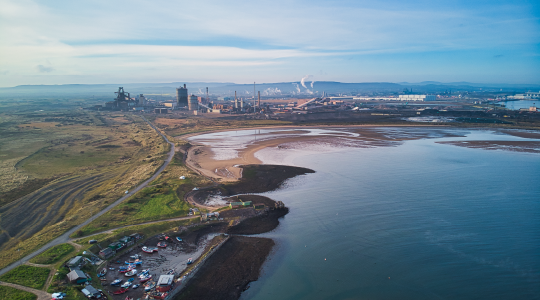
- Large scheme gated process – we put forward our “submission 2” for the Bran Sands Long Sea Outfall project. This is a statutory requirement that Ofwat supported in its PR24 determinations, but asked us to submit more details about the project (after more work had been done) before setting final cost allowances. We propose a total cost of £256m in this area, similar to the PR24 estimated costs.
Our published documents show how we have considered costs, benefits, stakeholder and customer views in our decision-making process. We also tested that this remains deliverable, financeable, and affordable for customers.